Create.
Define the job, expected result, and who owns it.

Qioo Platform
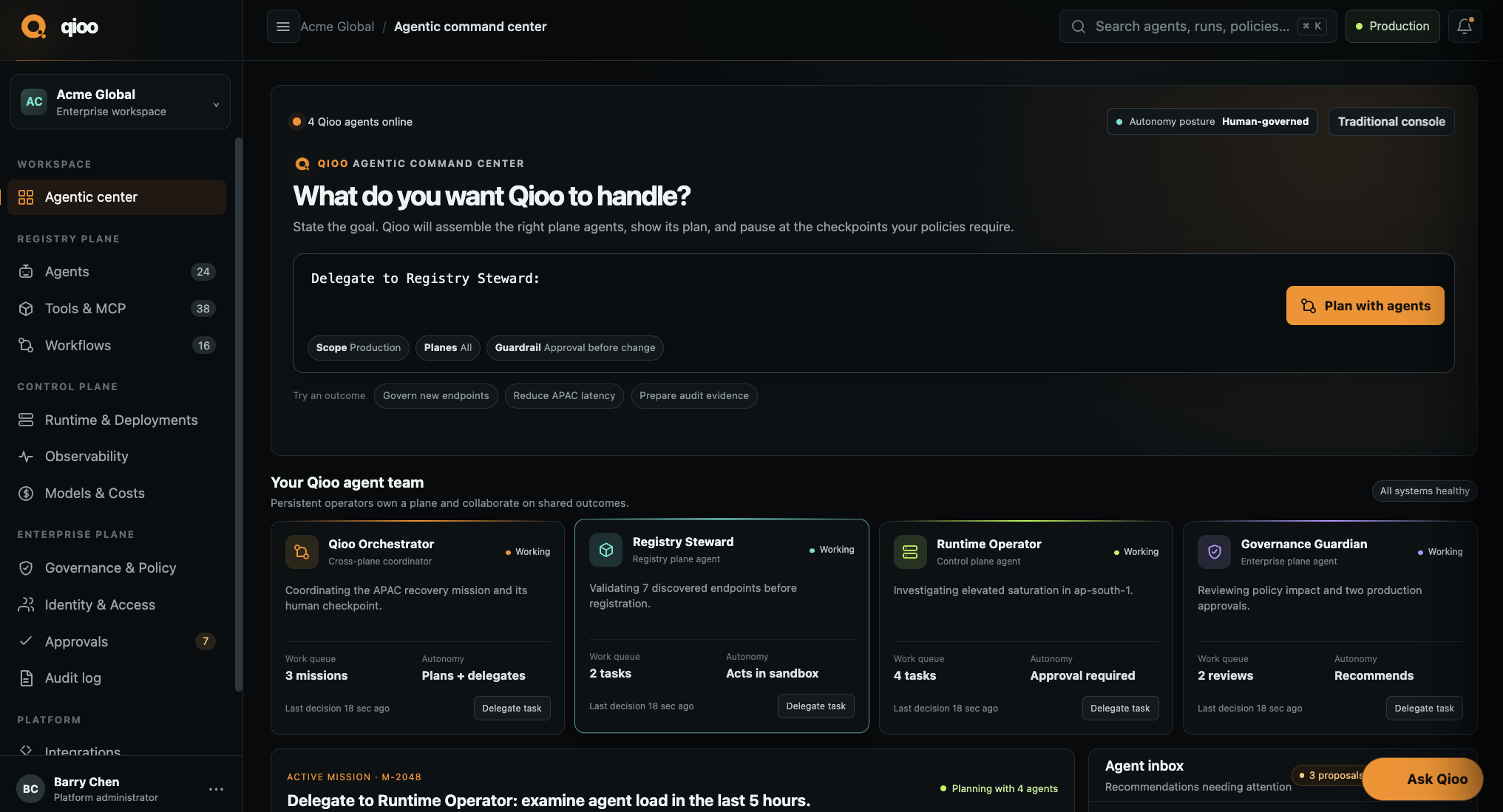
An Agent Factory is where a team builds or connects AI agents, runs them in real workflows, and improves how the work gets done. In Qioo, every agent has a job, an owner and a record of its work.
Create. Connect. Control. Improve.
An Agent Factory is a repeatable way for an organization to turn business needs into AI agents it can operate and improve. Teams follow a shared process to define the job, test the agent, release it with clear ownership and controls, and use results from live work to decide what to change.
Qioo is where your organization runs its Agent Factory. Agents you build in Qioo and agents you connect from supported systems share a registry. Their records show who owns them, what they did on observed runs, and where people stepped in.
Define the job, expected result, and who owns it.
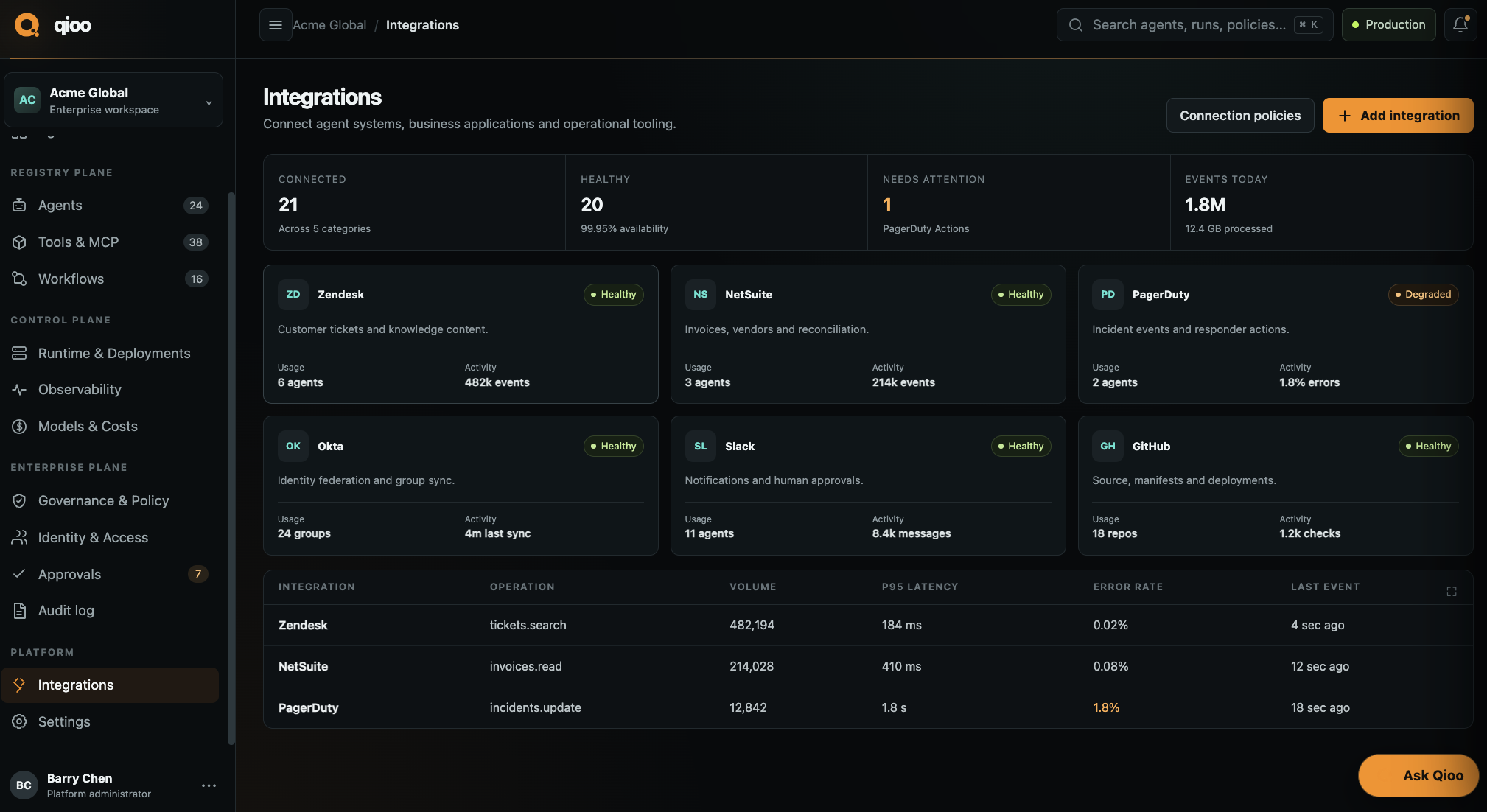
Bring agents you already use into the same repository through supported connections.
See who owns each agent, what it’s allowed to do, and which decisions need a person.
Review runs and cases to decide what to change in the agent or the way the team works with it.
Illustrative workflow
An invoice agent pulls the documents together, and Finance handles exceptions. When reviewers see that a receiving record is often missing, they can trace the pattern to specific cases. The team can change what the agent flags and how Finance handles the handoff, then review what happens on later cases.
Explore use casesSynthetic case evidence
Invoice Review · Owner: Accounts Payable · Version 1
INV-1042 · Invoice and purchase order found. Receiving record missing. Routed to Finance for review.
Finance holds the invoice. The team approves a proposed next version that flags missing receiving records earlier and prompts Finance to request the record.
AI agent management
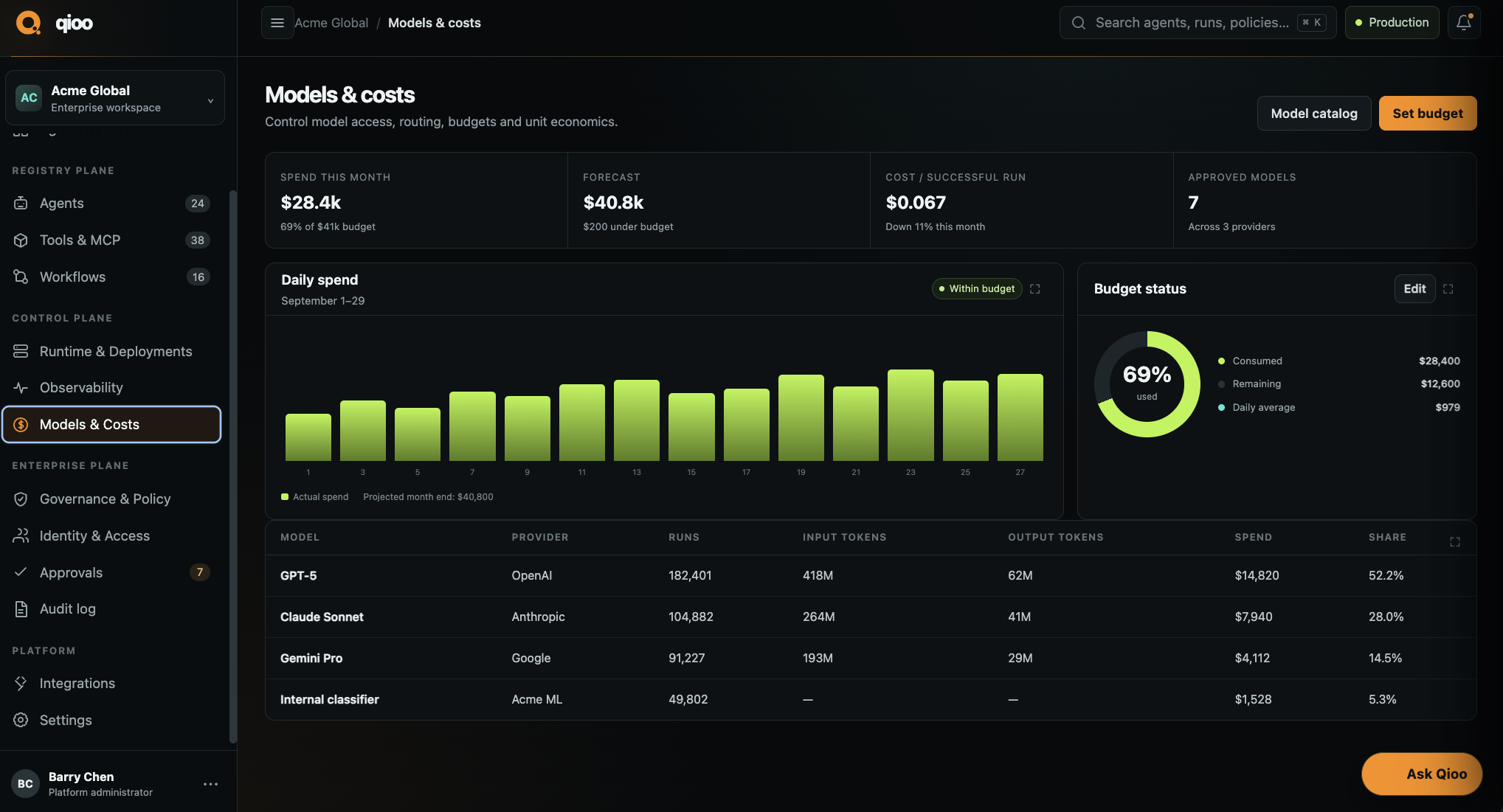
Organizational AI agents perform work across teams and business systems. Managing them means understanding their purpose, who owns them, what they can access and whether their work produces useful results.
Meet Ask Qioo
Ask Qioo illustrates how people can describe work, inspect what an agent has done and find evidence for their next decision.
Illustrative example requests, not a statement of current feature availability.
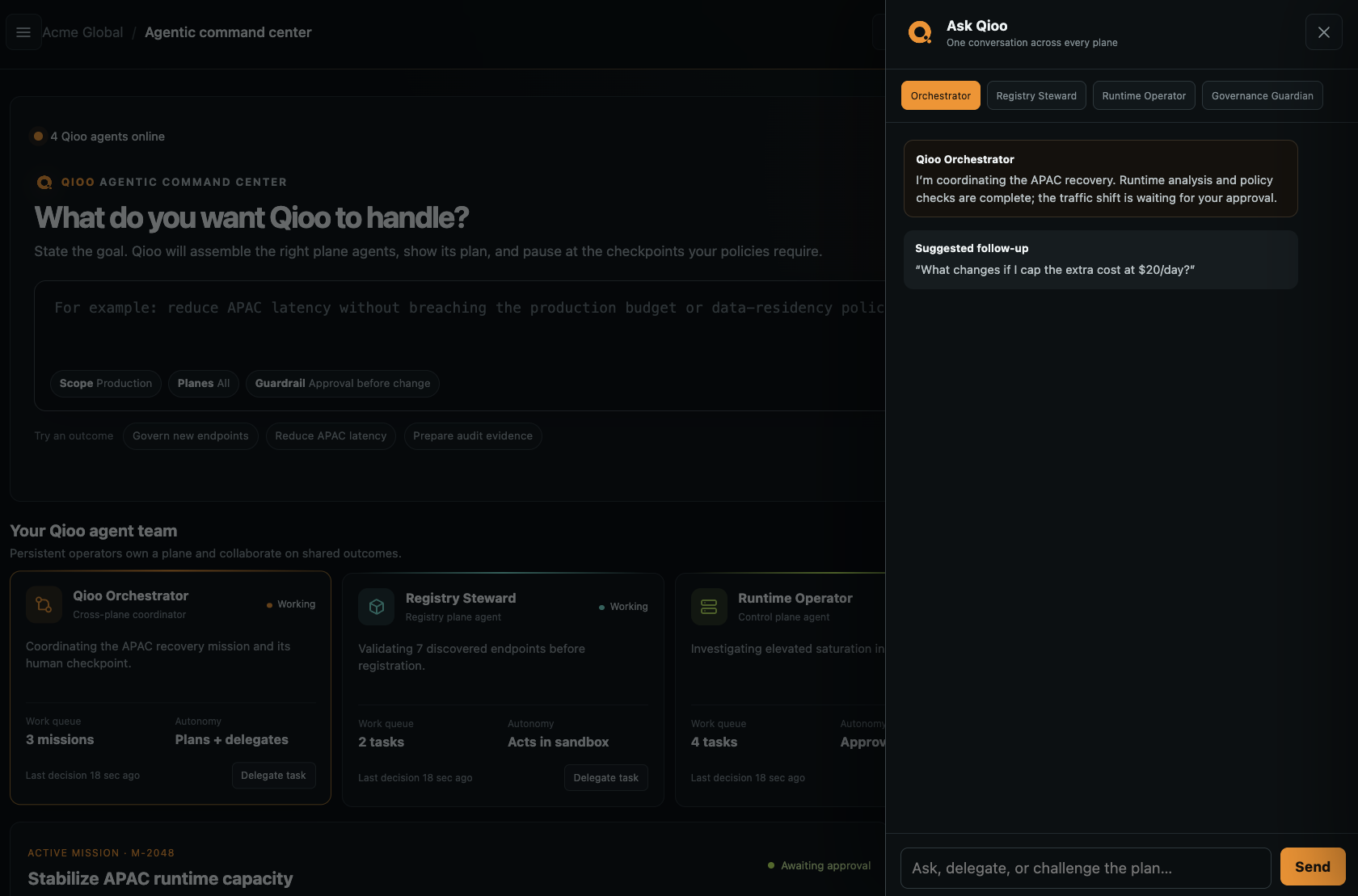
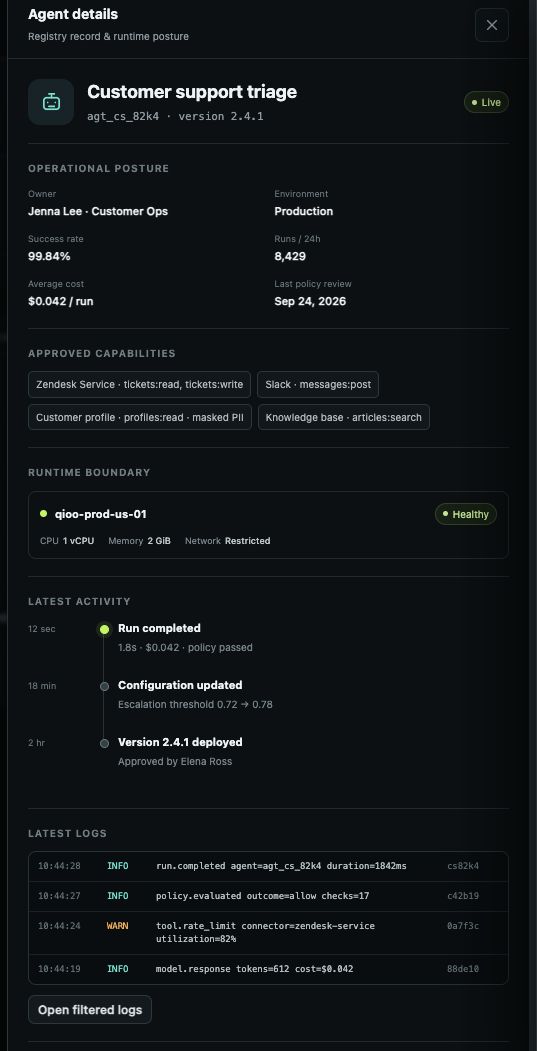
Create and know
Build from a prompt or bring an agent created elsewhere. Its record brings together its purpose, owner, connected systems and available operating history. A release changes what is deployed. The team still owns the work after release.
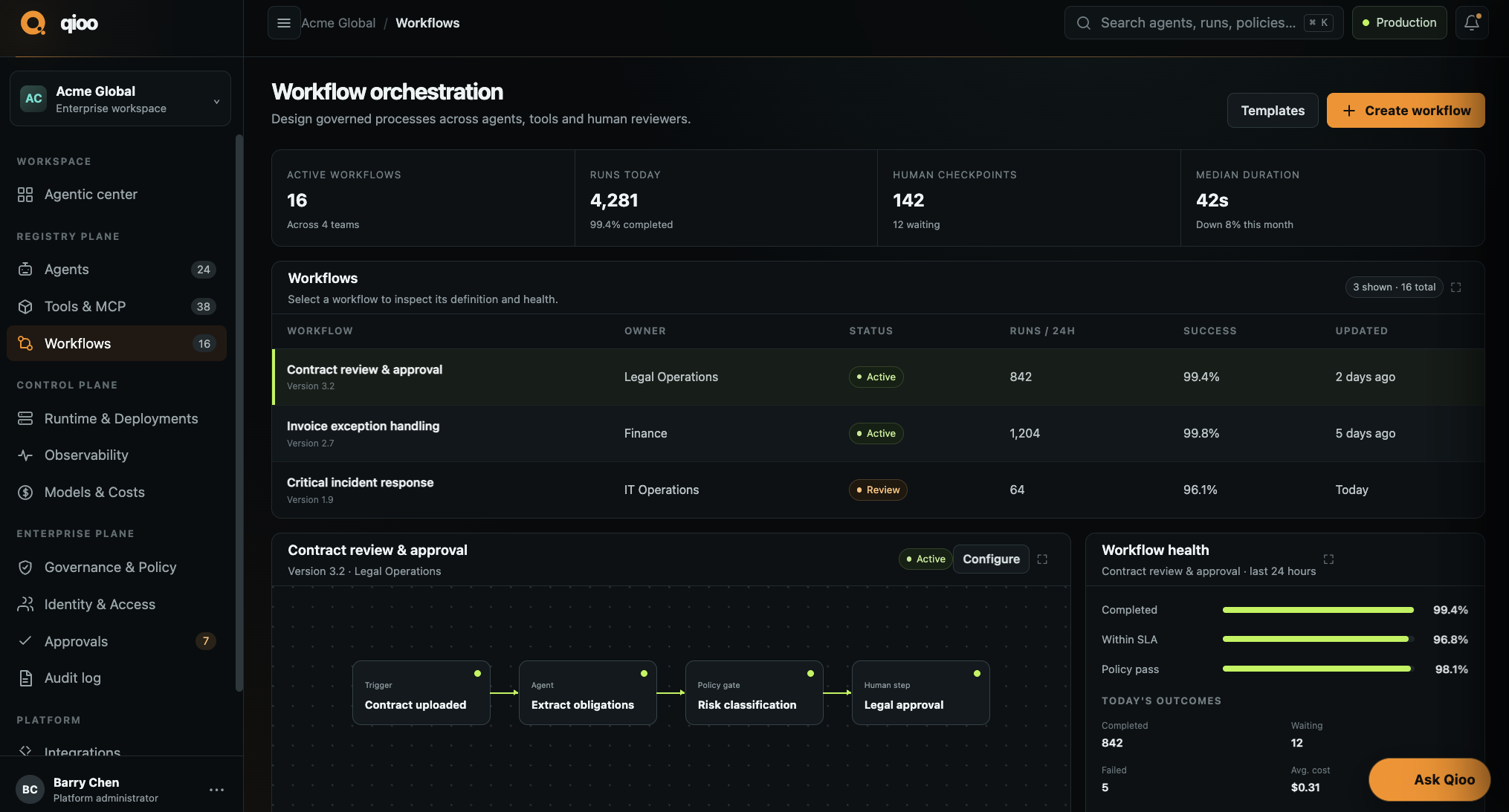
Control
Design workflows across agents, tools and human reviewers. Where a workflow is supported, policies and checkpoints can stay part of the work. External runtimes may provide different degrees of visibility and control.
Improve
Review runs, cases and available cost data alongside the work. The people responsible decide which changes to make and use later cases to see how those changes affect the outcome.
Clear boundaries build trust
What Qioo can discover, observe or control for an independently running agent depends on the source platform, available interfaces, permissions and integration scope. We assess these boundaries with each organization.
Start with the problem you have